Yukiscream & Miya – Announcing presenters
-
 Rope: Yukiscream, Model: Miya, Photo: hiko
 -
 Rope: Yukiscream, Model: Miya, Photo: hiko
 -
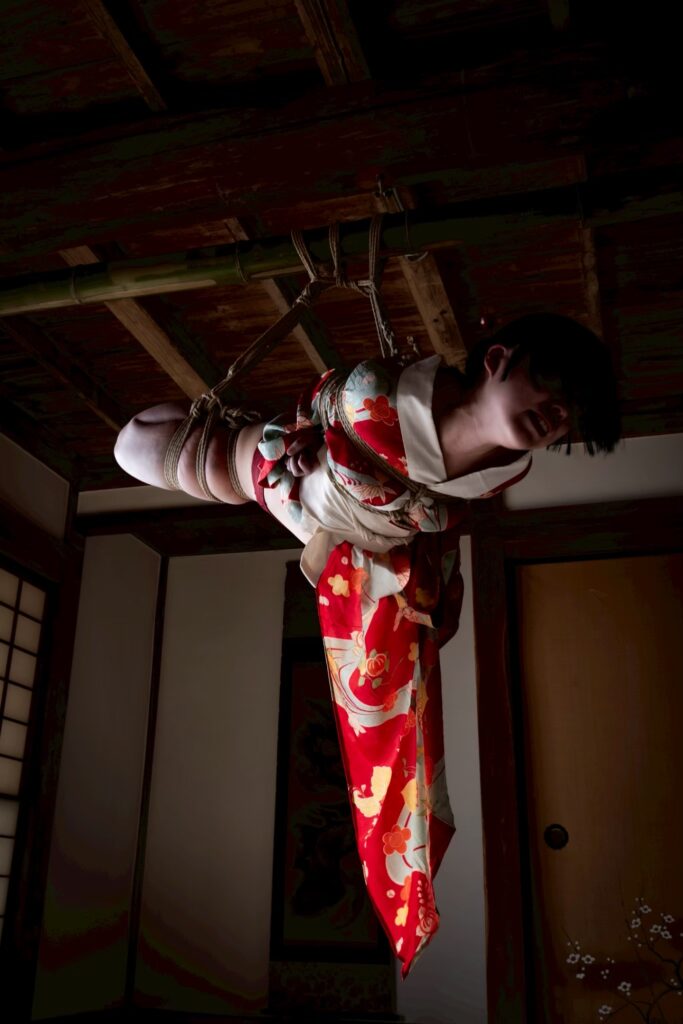 Rope: Yukiscream, Model: Miya, Photo: hau
 -
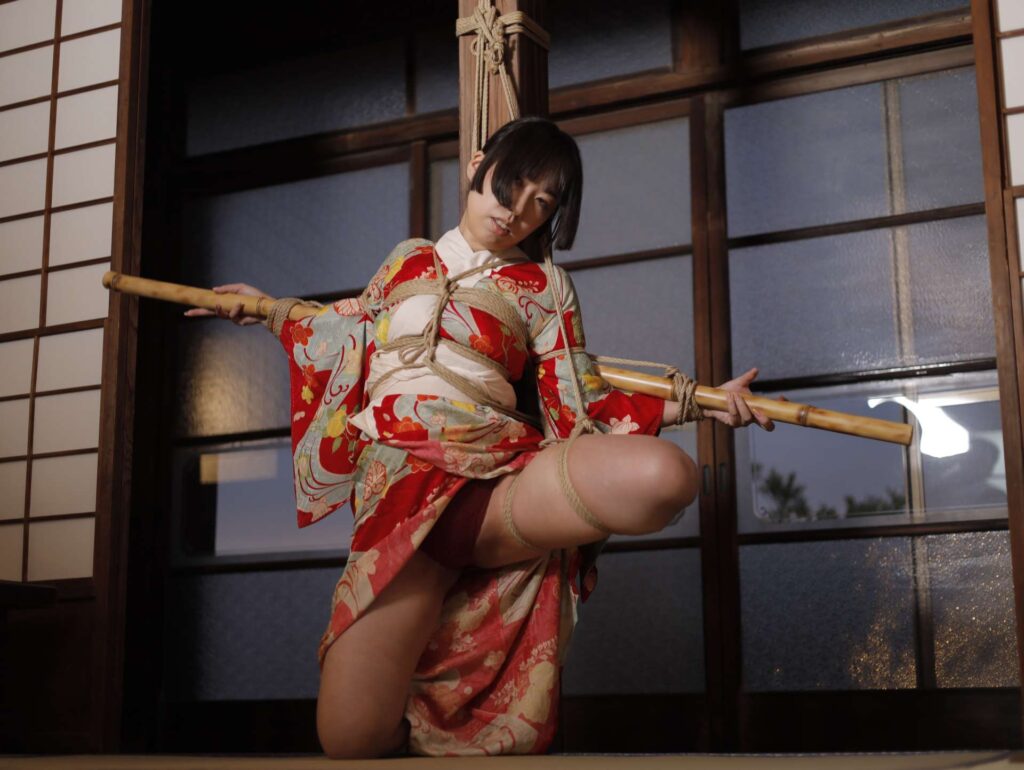 Rope: Yukiscream, Model: Miya, Photo: Yukiscream
 -
 Photo: Jyuri
Yukiscream (he/him) and Miya (she/her) are a Tokyo-based rope duo exploring an expression that emerges from three participants: rigger, receiver, and rope. For them, the rope is not merely a tool—it becomes a “character” that can embrace, apply pressure, and carry intention. Yukiscream began his journey in Tokyo under the guidance of Otonawa, and has refined his work through years of performances and collaborations.
Yukiscream’s approach is built around structures that change through the receiver’s breath, weight shifts, and active choices. Rather than imposing a fixed form, he observes responses closely and uses minimal construction to amplify subtle transformations. His ideal moment is when rope and body begin to affect each other so naturally that the rigger can almost step back as an observer—watching the relationship evolve.
For Miya, rope is a space where mind and body can open slowly and thoughtfully, and where understanding can deepen without relying on words. Because the roles of rigger and receiver are fundamentally different, she feels it invites both empathy for her partner and a grounded focus on herself.
What began as curiosity has become an essential part of how they build their relationship. With gratitude for the trust they share and the environment that allows them to keep creating, they aim to give something back through both performance and learning spaces.
Find out more about Yukiscream at his Instagram.
Workshops
Multi Strain rope (predicament)
(Workshop level: L3)
Multi-Strain Rope is about creating situations where the person being tied is given choices — but none of those choices bring true relief.
The receiver isn’t completely immobilized. They can lean forward, arch their back, or try to press their feet to the floor, always searching for a position that might ease the strain.However, no matter how they move, the pressure only shifts. The discomfort never disappears.
In this class, I will introduce two specific Multi-Strain Rope forms that I have developed.One creates a position similar to seiza (kneeling with legs folded under), and the other places the receiver in a high kneeling posture.
Both structures are designed to transfer strain dynamically across different areas of the body—such as the chest, abdomen, legs, and neck—as the receiver adjusts their posture.
By understanding how to layer tensions and create interactive predicaments, you’ll learn how to build rope scenes that are simple in structure, but rich in experience.
Rope as Communication: Five Skills for Tying Together
(Workshop level: L1-3)
In this workshop, we will explore how the rigger and the model create the rope experience together, beyond simply learning rope patterns.
Even with a simple tie, the feeling and quality can change greatly depending on five skills: rope handling, tension control, pacing and rhythm, distance and positioning, and observation.
We will use a two-person reflection sheet to look at the tie from both perspectives. The rigger will reflect on their intention, rope handling, tension, distance, rhythm, and observation of the model. The model will reflect on how the tie actually felt in their body, how clearly they could follow the rigger’s intention, and how the rope affected them.
This sheet is not for judging each other. It is a tool for understanding the gap between intention and experience, and for finding what to practice next.
Through demonstration, practice, and partner check-ins, participants will learn how to verbalize and refine the skills that make rope feel more connected, responsive, and alive.
Front hand tie harness
(Workshop level: L1-3)
This class explores a style of front-bound tie that emphasizes the balance between comfort and restriction.
A front tie can naturally create a sense of security—like a protective embrace—but by applying precise tension and structure, it can also introduce an undeniable sense of being held down and restrained.
One of the key features of this tie is its flexibility in hand placement.
As long as the foundational structure is secure, the receiver’s hands can be crossed, pressed together at the elbows, or even placed near the neck, allowing for adaptability based on the receiver’s body and the intention of the scene.
More than just a technical tie, this class focuses on the dialogue that happens through eye contact and presence.
Since the receiver’s hands are positioned in front, there’s a constant opportunity for the rigger and the person being tied to share a gaze, exchanging subtle cues of reassurance, tension, and connection.
By the end of this class, you will understand how to build a front tie that feels safe yet undeniably binding—creating a rope scene where every adjustment is a shared conversation between two people.
Japanese Style TK: Breath, Pressure, and Chest Control
(Workshop level: L2-3)
In this class, I will introduce a traditional Japanese gote (hands-behind) tie.
The structure itself is simple—upper rope, lower rope, and a basic chest wrap—but for the person being tied, it creates a strong sense of chest compression, making it an excellent tie for breath control play.
The key to this gote tie is the interplay of three forces:
・The function of the rope itself (how it constricts and locks),
・The posture and movement of the model.
・The model’s own breathing patterns.
To manage these forces effectively, you will need not only technical rope skills, but also the ability to closely observe and respond to your partner’s reactions.
By taking this class, you’ll be able to elevate a simple gote session into something deeply engaging and intense.
Furthermore, the understanding of these “three forces” will enhance your approach to other ties as well, giving you new perspectives on how to use rope as a tool for interaction and control.
One Rope Communication: Minimal Rope, Maximum Interaction
(Workshop level: L1-3)
How much can a rigger and a model create together with only one rope?
In this workshop, I will introduce ways to play, communicate, and build intensity within the simple limitation of using only one rope.
When you have only one rope, the most important thing is not a complicated structure.
Instead, you need to choose what to prioritize in each moment while feeling your partner’s movement, breathing, resistance, tension, and relaxation.
The rigger does not simply create a shape by themselves.
The model is also invited to respond in their own way.
Through this exchange, one rope becomes more than a tool for restraint — it becomes a tool for communication.
In the class, I will demonstrate how to freely play with one rope and explain the key points riggers should pay attention to.
I will also introduce several practical patterns, including ways to use one rope to connect the arms and legs and restrict the freedom of the whole body.
Participants with less experience will be able to take home concrete one-rope patterns and ideas for development.
More experienced participants will gain new perspectives on how to improvise, adapt, and change the direction of a scene by reading the model’s reactions.
Because there is only one rope, nothing unnecessary can be hidden.
Together, we will explore how to connect with your partner and create a strong effect with minimal force and minimal structure.