Sansei & Rory – Announcing presenters
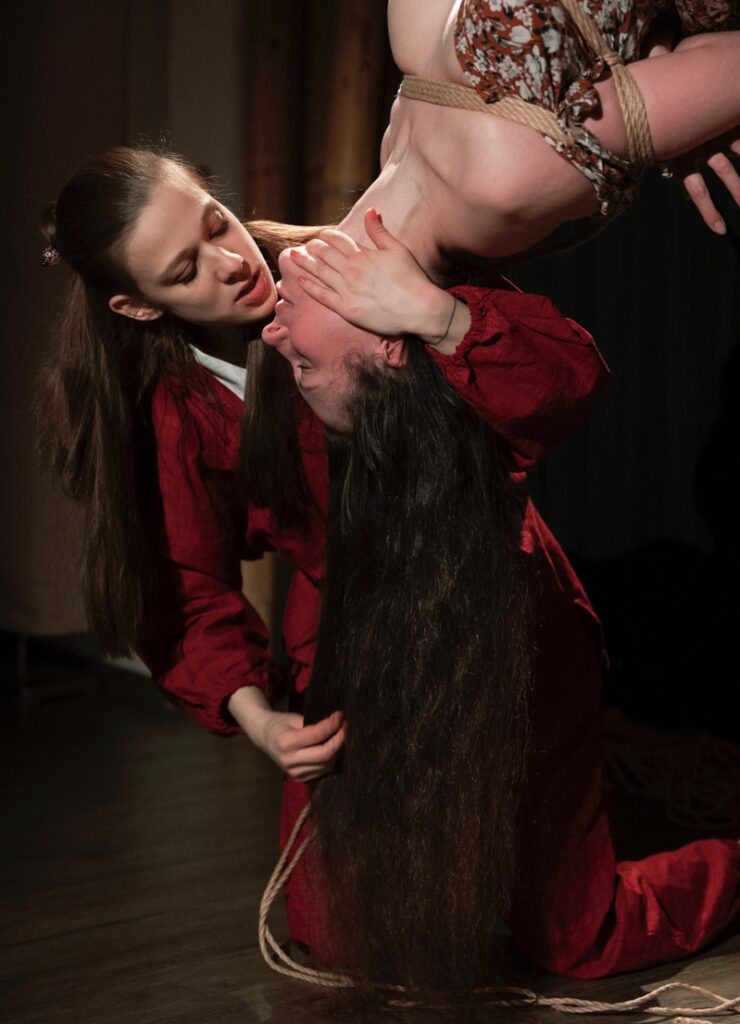
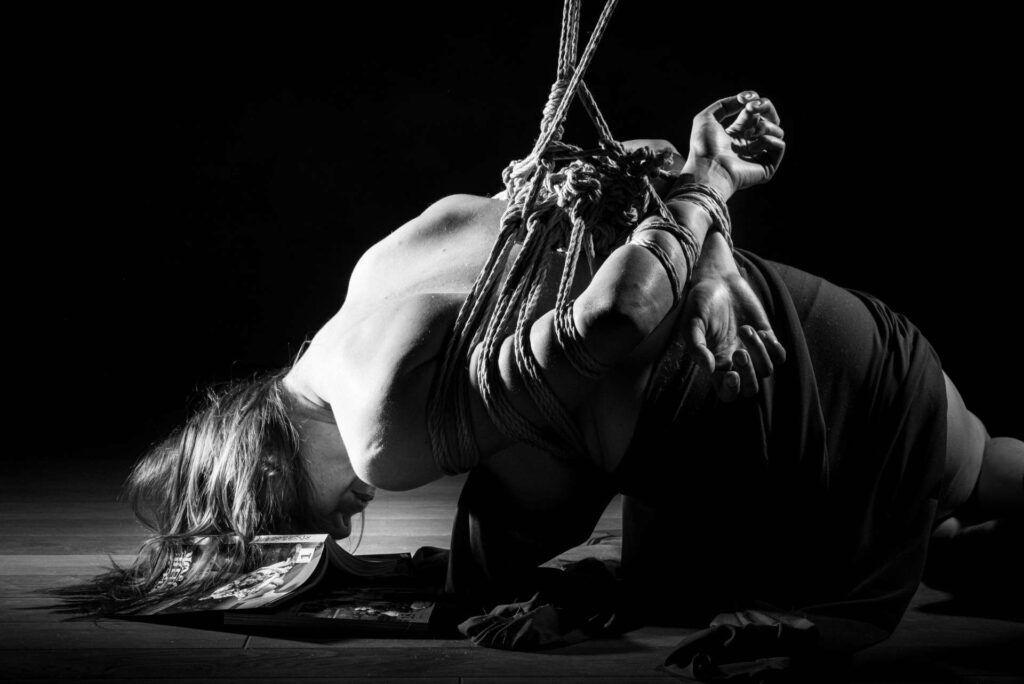
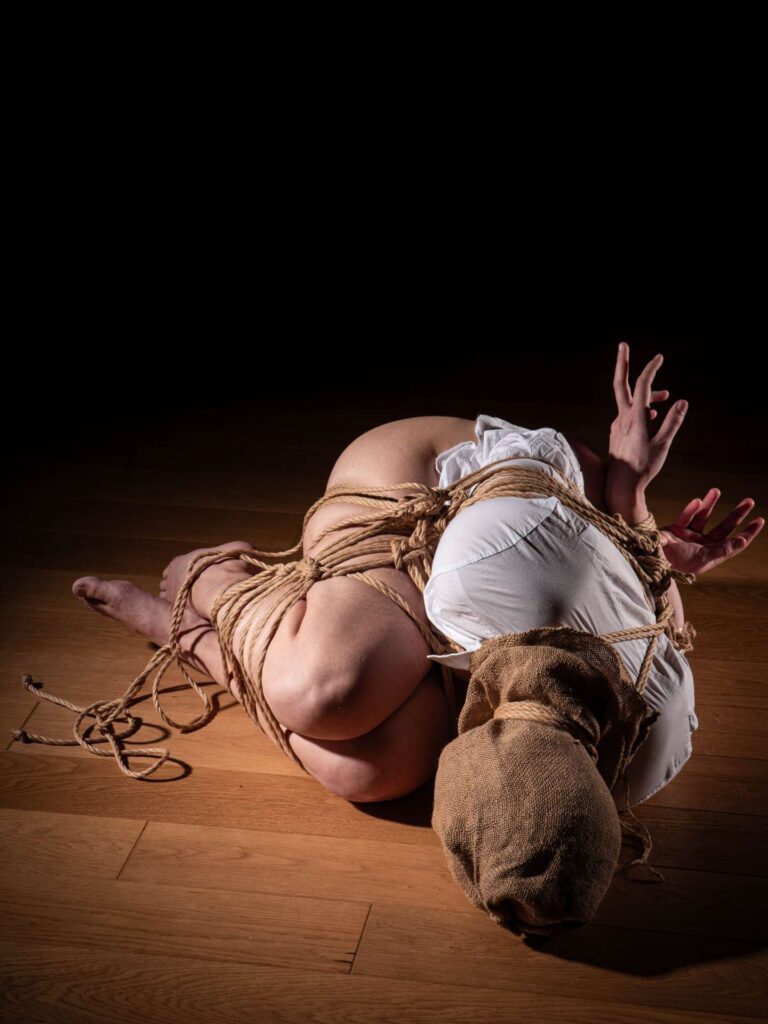
Sansei’s tying is primarily about the connection between two people, communication, and intense experiences, which she finds especially in traditional Kinbaku. She ties both as a rigger and as a model. Experience from both sides of the rope allows her to offer students deeper insight and understanding. She leads her workshops in a way that gives attention to both roles and places strong emphasis on the active involvement of models in the learning process.
She is fascinated by intense and often dark experiences, strictness, the psychological depth, philosophy, and aesthetics of Kinbaku. Since 2021, she has been teaching at Subspace Studio in Prague. Since 2022, she has been a student of Riccardo Wildties and Red Sabbath and is also a certified educator of the Kinbaku Luxuria style.
Rory originally entered the world of rope to become a rigger. Soon after, she met Sansei and, through her, discovered a world on the other end of the rope that she had never known before. She fell completely in love with both Sansei and this new side of rope.
She is now studying both paths. Her experience as a model in rope is primarily built on surrender and connection with her rigger. Although she does not enjoy suffering for suffering’s sake, she believes that some of the most powerful experiences arise when a person chooses to stay present even in challenging moments, especially when she can see pride and joy in her rigger’s eyes for what they are creating together.
Through her own journey, she strives to help models better understand their experiences, recognize their limits, and safely explore their submission.
Find out more about them at Instagram @sansei.tereza and @property_rory.
Workshops
The Art of Tying Hands
(Workshop level: L2-3)
Hands are a reflection of our emotions. They are one of our primary means of communicating with others and expressing who we are. They symbolize our freedom, our control, and our sense of protection. That is why tying, binding, or restraining the hands can become such an intense and unique experience. It takes away not only the physical ability to move, but also opens the door to deep intimacy, surrender, and the exploration of helplessness.
Through the seemingly simple act of tying hands, we will dive into the depths of emotion and experience. Leaving technical harnesses behind, we will focus on what hands tying truly offers—its aesthetics, the emotional experience, and the unique communication created through rope.
Large, taller and beautiful
(Workshop level: L3)
Many rope structures, ties, and aesthetic principles originating from Japan were originally developed for smaller, lighter, and more flexible models. However, that does not mean that taller, bigger, more muscular, or more masculine body types have fewer possibilities in the world of Shibari. It simply requires understanding their unique characteristics and knowing how to work with them effectively.
In this workshop, we will focus on aesthetics, technical adaptations, and the safety of ties for these body types, including lifts into suspension and working with suspension lines.
Body size or height does not have to be a limitation. On the contrary, it can become a unique advantage.
This workshop is also suitable for riggers whose tying partners are taller or larger than they are.
Waist rope
(Workshop level: L3)
A single rope. A simple Single Column Tie. Yet one of the most powerful tools in the world of Shibari.
A waist rope can shape the body, restrict breathing, encourage both arching and bending, and create a unique sense of strictness, helplessness, or, conversely, support. Despite its simplicity, it offers remarkable emotional depth and countless possibilities for use.
In this workshop, we will focus not only on the aesthetics and application of the waist rope, but above all on safety and technical details. Surely such a simple tie is almost impossible to get wrong? Think again! We will explore the most common mistakes and risks, how to avoid them, and several ties in which the waist rope plays the central role.
Arm Binder & Strappado for Less Flexible Arms
(Workshop level: L2-3)
Many Strappado workshops are primarily designed for flexible or hypermobile models. And that’s a real shame. This tie can have just as powerful an impact on models whose elbows simply cannot come together.
The gradual removal of freedom, the progressive binding of the arms, the deepening sense of surrender, and the unique aesthetics of this structure do not depend on flexibility.
In this workshop, we will learn how to safely tie both an Arm Binder and a Strappado for less flexible bodies. We will explore practical adaptations, focus on safety, and discuss how this structure can be used in suspension, as well as its limitations.